Strengthen Your Healthcare Software with Embedded Payments

The healthcare industry is notorious for being slow to update systems, especially when it comes to payments. So, what’s the reason for this reluctance toward a change that can improve speed and payment processing? 

Most healthcare providers simply don’t notice that their software is slowing down their receivables. For healthcare practices who have a complex and convoluted payment system due to health insurance and compliance requirements, it can be difficult to diagnose the problem. Most legacy EHR software is hyper-focused on patient care, but healthcare technology’s roadmap must encompass advancements to payments software, though they’re not always prioritized. 

An upgraded payments strategy can be a competitive advantage for developers and ISVs looking to capture more healthcare customers.  

The Link Between Modern Healthcare Payments and User Experience 

Non-traditional healthcare providers, such as chiropractors, mental health clinics, and physiotherapists, often don’t have the hospital volume to permit an extensive EHR system but need something more advanced than a basic payment processor. As more and more healthcare providers lean into digital payments, a new, robust payment system will become the norm. 

For example, between 2020 and 2021, mail-based medical billing dropped by 16%. Customers now prefer paying via phone calls, text messages, mobile app notifications, online portals, and email. Furthermore, around 60% of patients say they pay faster when using these alternative payment methods.   

All of this translates into an increased demand for better payment processing options from health providers and practices. Developers of healthcare software and EHR integrations should include digital payments in their strategy going forward.  

For software developers, security, usability, ease of integration, and flexibility are all required to stay competitive. Payments should be made easier, not harder, which means reducing the number of clicks and streamlining the payment journey. That said, removing slow, unnecessary steps without sacrificing compliance is key to improving cash flow for your customers. When they get paid quickly, they are reluctant to change to another provider.  

The solution for many software developers is simple—embedded payments.  

What are Embedded Healthcare Payments?

Embedded payments integrate right into your software. Customers no longer need to jump from a merchant landing page to a payment portal, and back, to complete a purchase. Embedded payments make it possible to keep the entire transaction on one, custom-branded page from start to finish.  

In addition to websites, embedded payments are compatible with mobile devices as well. If a patient downloads your app, they can pay via an embedded payment form in their phone. Keep in mind that an effective embedded solution should provide the ability to: 

  • Securely store card information on file 
  • Save more than one card—such as an HSA and credit/debit card 
  • Log all payment-related notifications 
  • Mail out statements for click-to-pay 
  • Set up recurring payments

The goal is to make payments as effortless, and as seamless, as possible. This not only accelerates receivables for end-users, but also reduces compliance pitfalls in the back office. It’s a win-win. For ISVs and EHR providers, helping your customers get paid faster is a key way to differentiate your software.  

Unlike traditional payment processors, an embedded payment solution isn’t just another mandatory expense. Some payment processors, like Fortis, provide revenue-sharing opportunities where you can actually earn money from each transaction. 

Keep Your Cash Flow Healthy with Fortis

Often, the best option for ISVs and software developers embedding payments into their platform is through partnership. The right partnership should offer easy integration, provide you and your customers with flexible payment options and revenue sharing for every transaction. Through customized embedded payment solutions, your software company can optimize healthcare payments effortlessly. 

Fortis is a leading embedded payments platform that provides end-to-end support for healthcare providers and practices to better serve their patients. Using award-winning API technology, the Fortis payment processing solution enables digital payments for a healthier cash flow, securely stored payment methods, click to pay invoices and more. 

To learn more about how Fortis can revolutionize your healthcare payment system through embedded payments, reach out to one of our guides


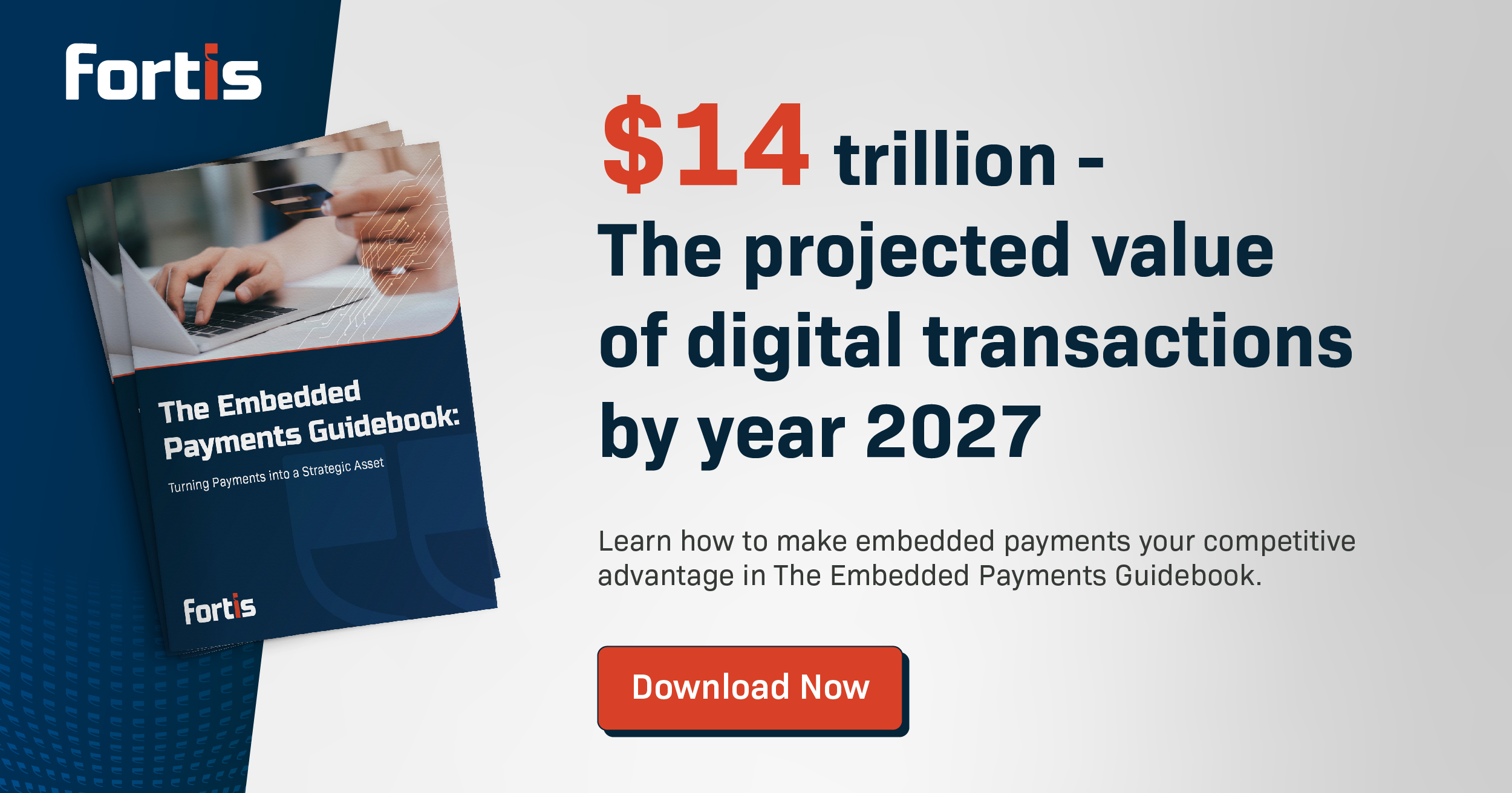
The Embedded Payments Guidebook: Turning Payments into a Strategic Asset 

It’s no secret that embedded payments are the future of eCommerce. In 2021, 73% of European business leaders planned to implement embedded finance solutions, and the trend has only continued to grow worldwide. Customer demands, new revenue streams, and an improved customer experience further propel merchants and ISVs toward embedded payment solutions. 

As a leader in the payments industry, we looked at the primary benefits of embedded payments, how they work, and why this technology can become a strategic asset. The full story is in our free Embedded Payments Guidebook.  

In our whitepaper, we discuss: 

  • The Basics of Embedded Payments 
  • The Business Benefits of Embedded Payments 
  • The Models of Embedded Payments 
  • Evaluating an Embedded Payments Provider 
  • Elevating Payments to a Strategic Asset 
  • Additional Resources for Getting Started 

We’ve summarized some highlights from the whitepaper, below: 

5 Benefits of Embedded Payments 

Legacy payment systems contribute to a sluggish and disjointed customer payment experience. Customers must often leave the merchant site to verify their payment information with a third party, creating friction. Customers then bear the burden of manual data entry and payment reconciliation. 

Embedded payments change that and more. The benefits of this technology turn everything around: 

  1. Automation reduces the amount of data entry. 
  1. Merchants can keep their payment portals on-brand and on their website or app. 
  1. This technology applies to every industry.  
  1. Organizations can leverage real-time insights and analytics. 
  1. They experience complete control over the payment experience.

How Embedded Payments Work

Given the flexibility of this technology, it only makes sense that there is more than one way to apply it. There are approximately three embedded payment models: 

  • Partner Referral Model – This a convenient plug-and-play solution, but it lacks customization options and is challenging to scale. 
  • Payment Facilitation (PayFac) Model – A PayFac simplifies the process by aggregating all transactions under an account, and these platforms are accountable to acquiring banks. This model offers software companies a greater revenue share but is also more costly to maintain.  
  • Embedded Payments-as-a-Service (EPaaS) – This embedded payments model allows software companies to leverage the customization and revenue benefits of a PayFac model but reduces the compliance and regulatory burden. 

From Payment Feature to a Strategic Asset 

The right embedded payments solution is a strategic asset, supporting customer retention efforts; a frictionless check-out experience, loyalty or rewards programs, alternative payments, and other value-adds streamline payments.  

What is the result of a technology-driven payments strategy? Healthy cash flow and opportunities for growth. 

To leverage embedded payments, you’ll want to carefully evaluate solutions to ensure they align with your financial and long-term goals. Furthermore, you want a solution that will scale with your business.  

Download our Whitepaper 

Ready to optimize your payments workflow and capture even more revenue? Then, you’ll want to download our Embedded Payments Guidebook for more insights from the leader in embedded payments.

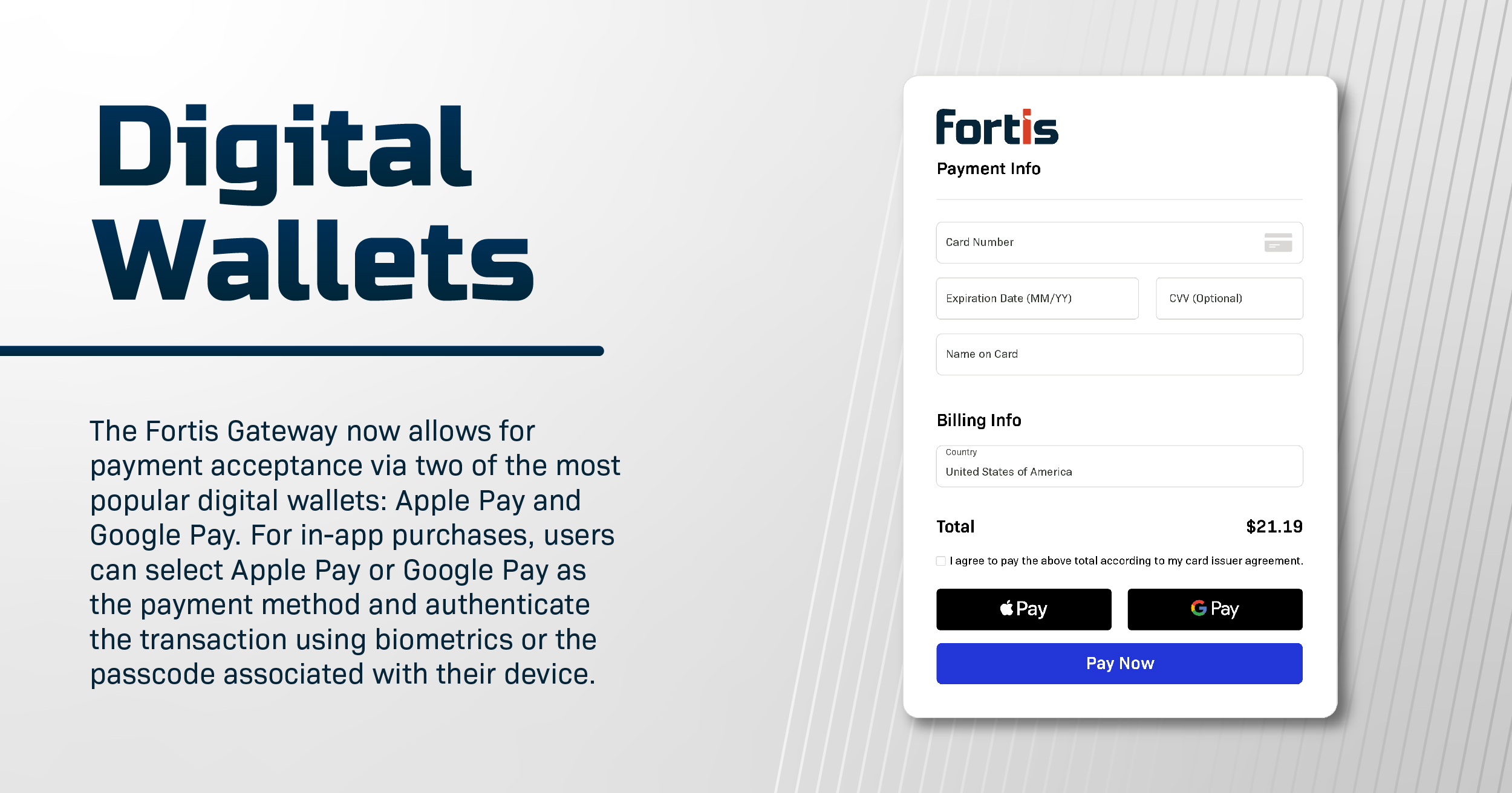
Apple Pay and Google Pay: Digital Payments Made Easy

Did you know that nine in 10 Americans use digital payments and 53% use digital wallets

While digital payment methods have been around for years, the pandemic brought them to national consciousness, and their popularity is only continuing to soar. Today, it has become increasingly common to see consumers and businesses, alike, paying via their digital wallet rather than by credit card or check. 

Unfortunately, integrating these payment types to legacy infrastructure isn’t always so simple. Most payment processors and facilitators have limited payment options and may not include these other types of alternative payments. 

Let’s explore why you should adopt these digital payment methods, and why it’s important to pick a payment processor that can seamlessly embed them into your current software or solution. 

Digital Wallets

There are a multitude of digital wallet options, some of which are international, like Apple Pay or Google Pay, and others that are regional or country specific. Digital wallets have several benefits for both the payor and the payee: 

  • Convenience – Digital wallets may be loaded with funds or draw funds from saved payment sources, such as bank accounts or credit cards. All the payee needs is their phone or wallet information to make a payment, and these transfers are lightning-fast for both the payor and payee. 
  • Security – One of the most important benefits of a digital wallet is its enhanced security. When a customer makes a payment, the payment information is never disclosed. In other words, the business receiving the payment never gets a look at the credit card or bank account number, which also reduces their compliance burden.  
  • Speed – Digital wallets offer instant or near-instant payments, allowing businesses to maintain a healthier cash flow and log payments in real time. 
  • Fewer fees – Accepting digital wallet payments typically costs less than credit card fees, making it more lucrative for business owners.  

Apple Pay 

The Apple Pay wallet maintains a 92% market share of the US industry, making it the most popular wallet. Customers can verify payments directly from the App Store with their biometrics or passcode, making it convenient and relatively secure.  

Fortis allows merchants to accept and monitor Apple Pay transactions. To tap into Apple Pay, Fortis users only need to visit their Virtual Terminal Settings to show these transactions. 

Google Pay

Google Pay is one of the top digital wallets worldwide, and it is accepted in at least 19 countries. As a reliable payment processor, consumers and businesses have begun using Google Pay more and more over the years.  

Similar to Apple Pay, Fortis users can enable Google Pay options through their Virtual Terminal Settings.  

Digital wallets as a part of a payments strategy  

Offering digital wallet payment options solves significant problems for both B2B and B2C businesses. 

For instance, Apple Pay or Google Pay may: 

  • Reduce processing costs and boost savings 
  • Increase conversions 
  • Improve the customer experience—thus building customer loyalty 

As more consumers and businesses tap into digital wallets, they will likely come to expect this option while checking out or fulfilling an invoice. Therefore, it can be helpful to take a forward-looking approach to payments strategy and include these popular payment choices. Not only will you be able to leverage the above benefits, but you can position your business for long-term gains.  

Optimize your payments 

Providing Apple Pay and Google Pay as payment methods offers a number of benefits for businesses. Greater security, increased convenience, and lower fees are just a few. However, as mentioned above, once you decide to include digital wallets as part of your strategy, choosing the best payment processor is the next step. 

Timmy emphasizes the importance of choosing the right payments advisor for your journey. 


As an industry leader with award-winning APIs, Fortis understands the importance of security, flexibility, and innovation when it comes to accepting payments. That’s why our platform is built around providing a seamless and secure omnichannel solution

Speak with our payment experts to learn more about how Fortis can become a strategic advantage in your business. 

2023 BWH Hotels Annual Convention Recap: Fortis Helps Hoteliers Protect Their Revenue

Last month, Fortis participated in the Best Western Annual Convention hosted in beautiful Honolulu, Hawaii. The Fortis team had the opportunity to engage in educational sessions, workshops, and intriguing product demos to experience the latest in all things property management.  

As the leader in embedded payment solutions for businesses in the lodging industry, Fortis made a splash, stirring up conversations and answering questions from attending hoteliers on the trade show floor. The team’s expertise in B2B payment solutions allowed them to share how hoteliers can accept payments faster and more securely, minimize fraud, lower costs, and protect their revenue in the long term.    

Event Highlights: Educational Session on Chargebacks

One of the highlights of the event was an educational session hosted by Raj Pannu, VP of Business Development – Lodging at Fortis, called “The Top 5 Best Western Chargebacks and How to Fight Them.” This session delved deep into the world of chargebacks as Pannu walked attendees through best practices to help hotels protect themselves against chargebacks, minimize fraud, and reduce operational costs. 

What stood out to me was the opportunity hoteliers have to really make an impact in the industry. The event showcased real-world success stories and inspired attendees to embrace innovative strategies for sustainable growth,” said Raj.  

The session was a testament to Fortis’ commitment to advancing the lodging industry forward and fostering growth for hoteliers through innovative solutions. 

The Fortis Hospitality Difference

Fortis continues to lead the way in embedded payment solutions for businesses in the lodging industry. Our all-in-one payments platform seamlessly integrates into property management systems, empowering hotel owners to lower costs, prevent chargebacks, and accept guest payments securely. With industry expertise and easy-to-use technology, Fortis equips Best Western and other property owners with the tools they need to run their hotels successfully.  

Want to learn more about how Fortis can help you? Let’s talk! 

Adobe Commerce: Enabling Merchants and ISVs to Streamline Payments

Back in 2018, Adobe announced its agreement to purchase Magento Commerce for $1.68 billion. As a leading commerce software, the Magento solution enabled Adobe to expand its stellar cloud service offerings. 

Magento’s cloud-based platform supported both B2C and B2B organizations with a number of top-notch features, including: 

  • Category management 
  • Client accounts 
  • Customer service 
  • International support 
  • Marketing tools 
  • Order management 
  • Payments 
  • Product management 
  • Promotions 
  • Search technology 

We’ll explore how Magento’s software evolved after becoming Adobe Commerce, and what benefits businesses and ISVs can expect from the new approach, especially when it comes to payments.  

From Magento to Adobe Commerce: How the Platform Looks Today 

Adobe has long been an essential software for businesses across industries. As a leader in content creation, marketing, advertising, and analytics, it’s only natural that the organization would add payments to its applications. Magento’s versatility was integral to expanding Adobe into payments. And, now as Adobe Commerce, the software has been integrated into the new platform, with several changes. 

The first of which is the dependence on the cloud. Prior to its acquisition, Magento offered both on-premise and cloud platform options. With Adobe Commerce being included in the Experience Cloud, users can now tap into their payments data from anywhere—and sync with other Adobe applications. In other words, merchants and ISVs can leverage the vertical integration between the eCommerce software and other key applications, such as web development and video production. Having the same vendor for multiple functions simplifies the workflow and tech burden, too. 

Adobe also enables users to take advantage of various payment integrations. This component makes accepting and processing payments easy.  

The Top 5 Benefits of Adobe Commerce 

There are many advantages to ISVs and merchants when it comes to using Adobe Commerce. The top 5 include: 
 

  1. Personalized experiences – Merchants and ISVs can leverage the platform’s AI to create and deliver relevant promotions and recommendations to customers.   
  1. Reach more customers – Omnichannel capabilities enable new ways to reach customers, either through enhanced marketing campaigns, merchandising options, or additional payment features. Reach can be extended to new locations and customer segments without leaving the platform with localized options.  
  1. Extensive integrations – As one of the biggest software systems out there, Adobe supports hundreds of free and premium plugins.  
  1. PCI-compliance — Security and compliance is critical for any payment system. Adobe Commerce not only offers high-quality security measures, but also PCI-DSS compliance. 
  1. Enhanced data and analytics – Adobe Commerce enables merchants and ISVs to gain full visibility over their sales and commerce processes.  

The Fortis Difference 

As the leader in embedded payments, Fortis seamlessly integrates with Adobe Commerce, enabling merchants and ISVs to enhance their payments experience. 

Our award-winning APIs and payment solutions provide unique, customizable payment pages, increased security through tokenization, and a faster and easier checkout process for end-customers.  

Looking to get started? Learn more about how Fortis can accelerate your payments with our Adobe Commerce plugin

4 Must-Have Features for a US-Based Canadian Payment Processing Solution

The infrastructure for Canadian digital payments has been a long time in the making. For years, payments giant Interac has been a leader in building digital payment infrastructure in the country.  

Now, US-based payment solutions can leverage this infrastructure and further transform it with proprietary technology. This includes empowering ISVs and merchants with embedded payments and omnichannel payment systems.  

Below, we discuss the essential features needed for US-based business to process payments in Canada. 

Top Features for US / Canadian Payment Processing Solution

Any powerful payment processing platform should include several features, regardless of the country, like multi-currency support, customization, and multiple payment options. But here are four specific features to consider when thinking about processing in a Canadian ecosystem:  

  1. Local payment options: Accepting local payment methods, including Interac debit acceptance and other forms of electronic funds transfer (EFT), is essential. Simply accepting card-not-present (CNP) or card-present (CP) is not enough. 
  1. Loyalty programs: When it comes to accepting payments, it’s not all about credit cards and digital transfers. Gift and loyalty programs can also help businesses build revenue and boost customer retention. Having a platform that integrates these features with your regular payment options enables you to get creative with your overall payment strategy.  
  1. Omnichannel approach: Not all customers are keen to use a credit card—and even if they are, merchants may need to accept their payments via phone, computer, or in-person. An omnichannel approach to payments streamlines the experience for both the merchants and customers. 
  1. Seamless customer experience: The end customer may abandon their cart during the payment process, particularly if it takes too long or looks unsafe. A platform that offers detailed customization without sacrificing local compliance standards helps merchants optimize their processes. The increase in revenue then filters down to their software provider so everyone wins.  
Timmy Nafso, Executive VP of Fortis, tackles the crucial question: “Why Canada?”

Optimize Your Payments Strategy

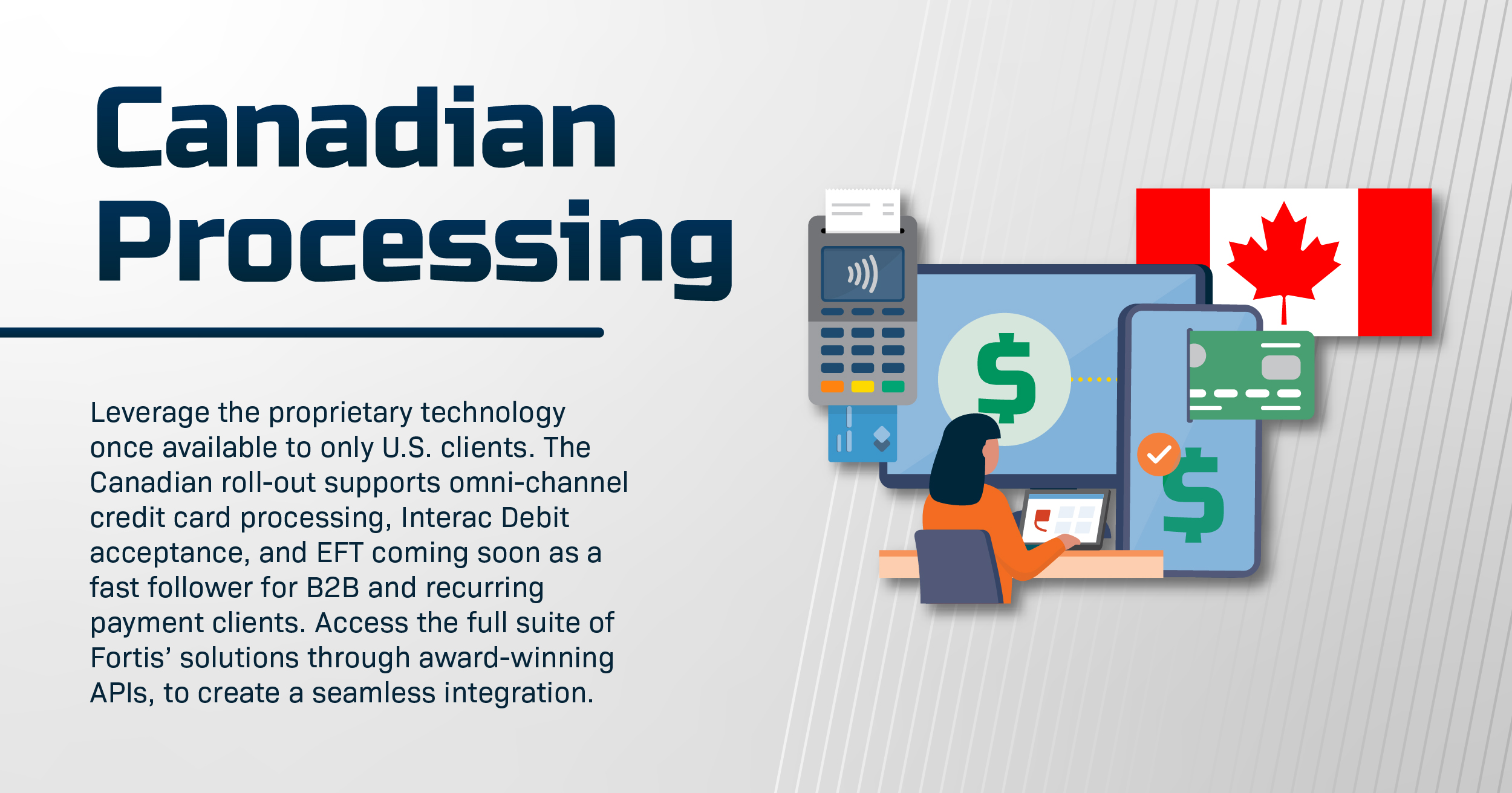
Fortis has long been a leader in embedded payments in the United States, and solutions are just starting to expand to Canadian customers. ISVs and merchants processing in Canada can now access the Fortis Platform’s full suite, award-winning APIs, and thorough guides. To learn more about this recent expansion, read the formal press release, here. 

To find out more about the Fortis Platform’s support for payment processing in Canada, schedule a call or download this one-pager.  

What is a PayFac and How is it Beneficial to a Software Provider?

For software providers, streamlining the sales process, onboarding merchants quickly, and having an all-in-one solution is top of mind to stay competitive. Keeping up with the ever-evolving payments industry, however, makes this a little difficult. Considerations like selling in regional or global markets and building a solution that’s adaptable and accepts multiple currencies is critical. All the while, software providers want to ensure that their account is protected against fraud and other threats. 

Software providers have one of two options – either building the payments infrastructure themselves or enlisting the help of a PayFac. A PayFac is a payment facilitation solution for software providers and small businesses that enables them to streamline payments without investing in the infrastructure themselves. Instead, they choose a payment facilitation provider that manages everything from underwriting to gateways. 

Let’s explore some of the reasons why a software provider might consider using a PayFac. 

Timmy Nafso dives into the myths and realities of payment facilitation and talks about the importance of choosing the right model for your business.

PayFac and the advantage of payment facilitation providers 

As an embedded payments solution, payment facilitation providers can customize services to meet software providers’ specific needs. This approach isn’t just convenient in terms of cost and time-savings, but it allows software providers to scale as they serve more merchants or customers. At the same time, they do not have to handle the liabilities related to maintaining a payments module, such as PCI-DSS compliance, gateway reporting, or regular security tests.  

Depending on the PayFac solution chosen, merchants can accept more than just credit cards. ACH payments, eChecks, and other forms of digital transfers provide a better customer experience while retaining more revenue.  

Measuring the competitive edge of adopting a PayFac 

It’s easy to see how PayFac offers software providers the technology to effortlessly process payments at a fraction of the cost of in-house solutions. However, it’s the tangible benefits to their merchants that ultimately adds to the bottom line. 

For instance, merchants and eCommerce businesses struggle with high cart abandonment rates, thus reducing their revenue and the amount software providers would receive from payment processing. 18% of customers abandon their cart due to complex or lengthy check-out processes alone, and another 19% didn’t trust the website with their credit card information.  

Fortunately, these issues, along with others, can be resolved with a streamlined, user-friendly payment facilitation system. Improving the check-out experience can boost conversion rates by 35.36% — and when the merchant earns more, so does the software provider.  

A best-in-class payment solution 

With Fortis’ PayFac solution, software developers and merchants can leverage award-winning APIs and leading payment technology to scale their business. Fortis manages everything for you – underwriting, fraud monitoring, funding, gateway reporting, and chargeback management. Fortis also leverages negotiations made with acquiring banks and processors, supply an in-house Level 1 PCI compliant payment gateway, and provides all necessary certifications and licenses. Even better, if you don’t want Fortis to manage it all – you have that option, too! The Fortis Platform’s sophisticated and diverse API libraries allow you to leverage and control the payment process flow and customize the merchant’s onboarding and transactional experience.  

To learn more about the Fortis difference, discover how easy it is to simplify your payments with our PayFac solution.  

Quick Invoice: Get Paid Faster with an Optimized Workflow

Despite gains in digital invoicing, many businesses still struggle to scale their accounts receivable (AR) operations. Manual processes like mailed statements from the AR team or the customer’s accounts payable (AP) department, can cause considerable lag in receiving payments. 

One survey found that 87.6% of businesses in Western Europe faced delinquent B2B payments. Over half of the respondents said that switching from manual to e-invoicing processes resulted in faster payment times. On the customer’s side, AP teams are increasingly concerned about the invoice approval process and find manual review to be an issue.  

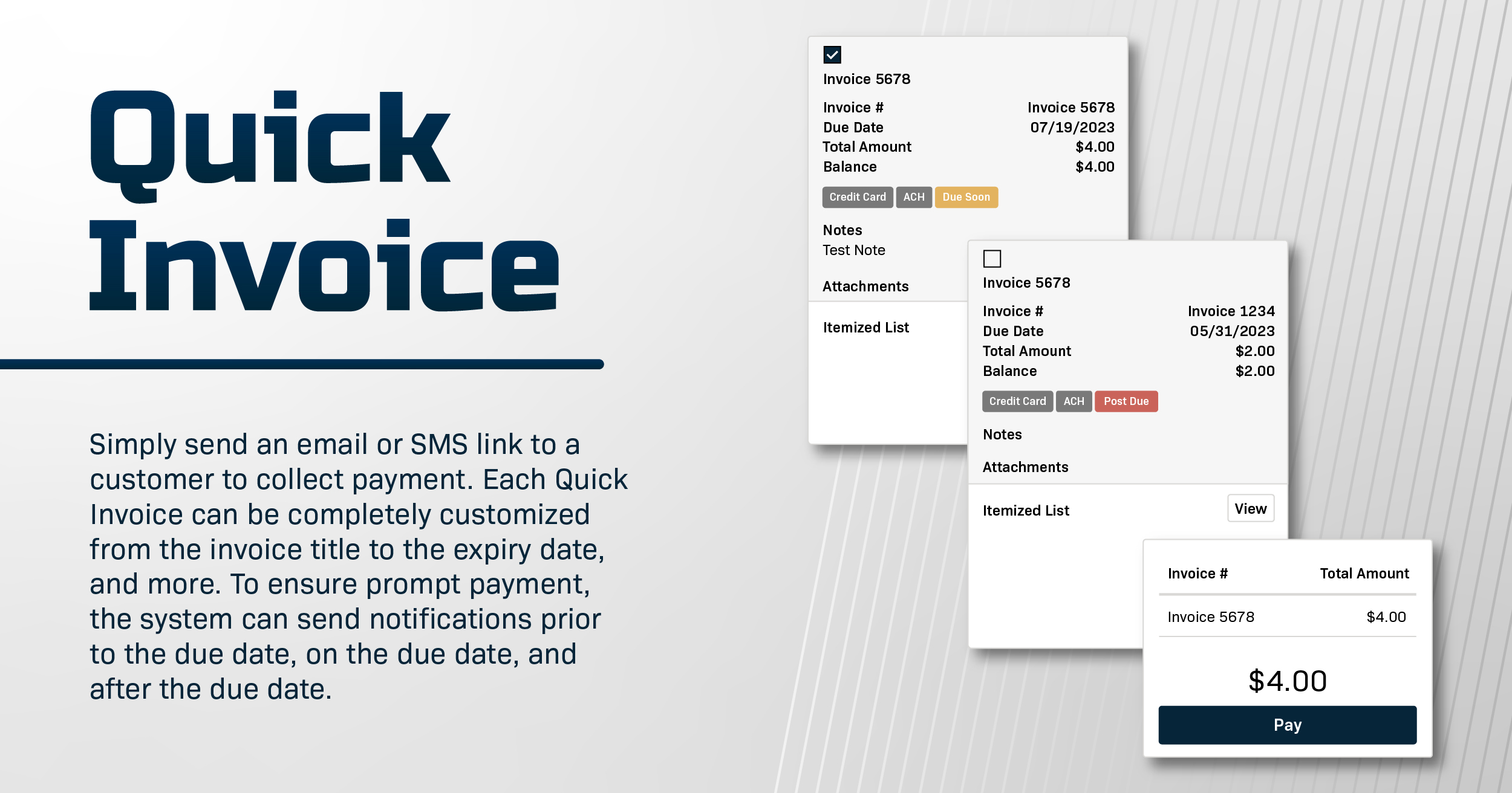
This challenge presents an opportunity for ISVs seeking a competitive edge. A payments platform that enables quick invoicing and streamlines the payment process provides a valuable, high-demand service. Quick invoicing through an embedded payment system allows merchants to send invoices via SMS or email and accept electronic payments. Ideally, the process should be simple and convenient for both the payee and the payor. 

Segment from episode one of Embedded. This demo explains how to leverage quick invoicing within the Fortis ecosystem.

Benefits of Quick Invoices 

Let’s look at some advantages of quick, digital invoicing: 

  1. Create invoices quickly 
  1. Automate reminders before and after the due date 
  1. Allow for overpayment or partial payment 
  1. Offer several payment methods 
  1. Review all past and open invoices from both the payee and payor side 
  1. Pay from multiple devices 

These features benefit both parties. The merchant is able to set clear payment terms and effortlessly send electronic invoices and reminders. At the same time, the customer can quickly review open invoices, choose how to pay based on their preferences, and pay from their phone, tablet, or desktop. Customers can also adjust payments for cash flow fluctuations—such as making a partial payment during low periods and submitting the remainder later.  

A Payments Partner for You  

As the leader in embedded payments, Fortis has developed its payment platform to match the needs of a modern business. Our embedded payment solution empowers organizations to streamline their billing through quick invoicing, automation, multiple payment options, and more.  

To learn more about how you can optimize your payment process, check out our recent Quick Invoicing feature.  

Fortis Launches Embedded Podcast to Educate and Empower ISVs and Merchants 

Fortis furthers its commitment to helping businesses grow and scale with web series that will educate and empower ISVs and merchants with product news, expert interviews, technology showcases and more. 

NOVI, Mich., August 29, 2023/PRNewswire/ — Fortis, a payment and commerce technology leader for software providers, marketplaces and scaling businesses, today announced the launch of its first-ever video and podcast series, Embedded: Unveiling Payments Latest Innovations

The monthly series is designed to educate and empower independent software vendors (ISVs) and merchants on the latest happenings in the payments space through candid discussions with Fortis leadership and subject matter experts (SMEs), including a detailed showcase of Fortis solutions. 

“We are ecstatic to shake up the payments world with a new face for product education. This will not only be a valuable asset to our current partners but also provide educational resources to future prospects,” said Greg Cohen, Fortis CEO.   

Each episode is accompanied by a podcast where Timmy Nafso, Fortis Executive Vice President, is joined by high-profile guests across the payments ecosystem. Together, they will explore relevant topics, from current events to thought leadership to the latest product news. Each episode will be released on the fortispay.com website and podcasts will be available on Apple Podcasts, Google Play, and Spotify. 

Nafso kicks off the inaugural episode with a level set on platform service fees, followed by an SME interview and demos, shining a spotlight on three key Fortis solutions: Paylink, Retained Amount and Quick Invoice. “It’s an honor to be a part of the launch of Embedded. There needs to be more discussion around the challenges that ISVs and merchants are currently facing. Hearing from these payment experts will provide a deeper understanding of the ever-changing world of payments,” says Nafso.  

Watch the first episode of Embedded, here: https://youtu.be/DNbozNp6TVs

### 

About Fortis 
Fortis delivers comprehensive payment solutions and commerce enablement to software partners and developers, processing billions of dollars annually. The company’s mission is to forge a holistic commerce experience, guiding businesses to reach uncharted growth and scale. As the solution of choice for the future of payments, Fortis moves commerce closer to invisible with a proprietary platform that supports and strengthens the commerce and payments capabilities of software partners. For more information, visit fortispay.com

MEDIA CONTACT: 

Emily O’Brien 

Next PR 

fortis@nextpr.com 

What is a Retained Amount for ISVs?

Service fees for software have come a long way. Software developers continue to evolve and change the way they charge their merchants. For instance, some developers may find it helpful to avoid charging a monthly or yearly one-time fee for their software services, keeping a portion of each transaction instead. Moreover, some would prefer to hold a convenience fee or withhold a donation, but don’t currently have a way to separate the charges from merchants’ transactions. Fortunately, this is where a Retained Amount feature can help. 

How Retained Amounts Work 

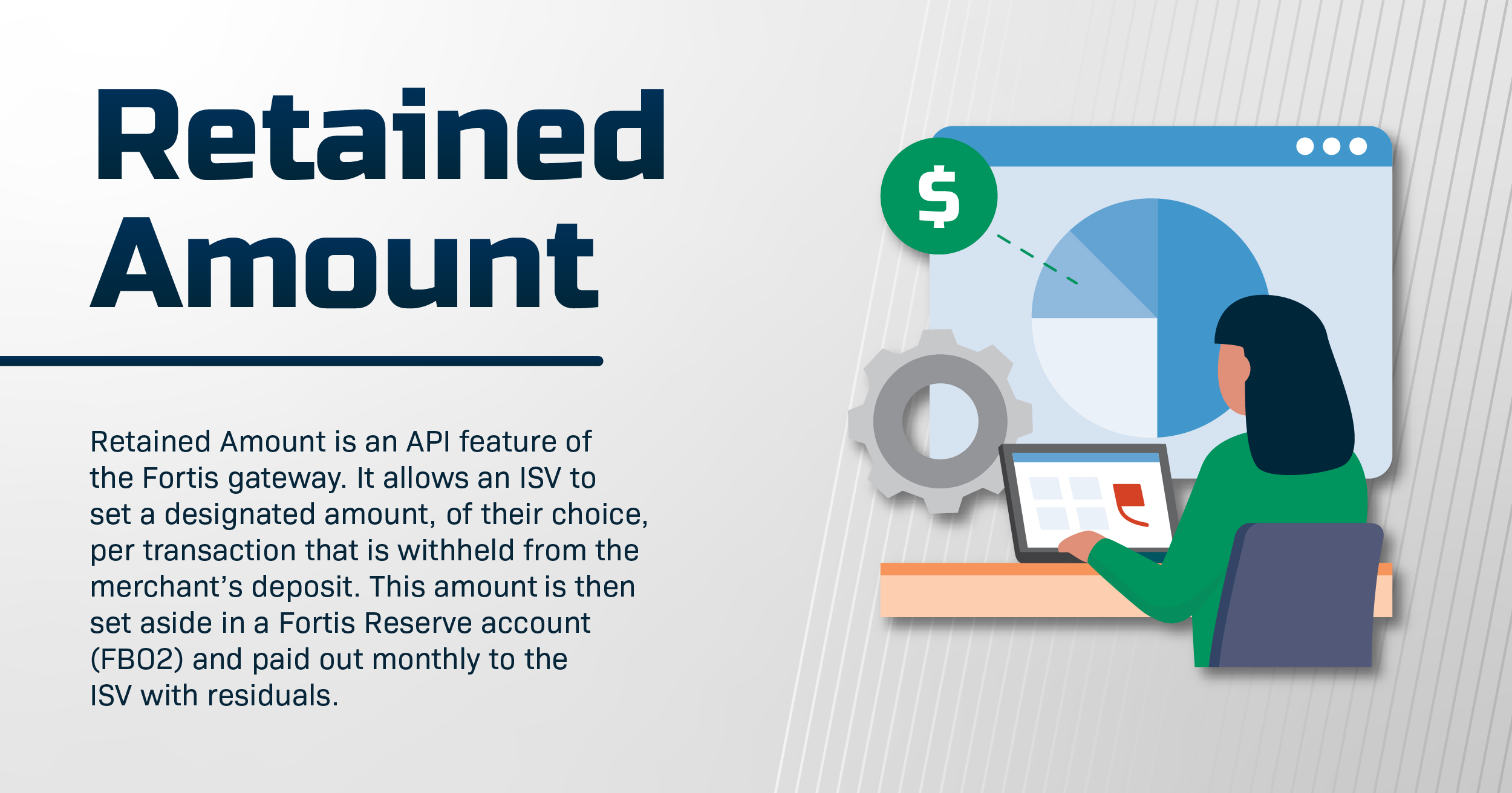
Sometimes called split funding, a Retained Amount withholds a percentage of a merchant’s deposit. The funds are then distributed into two or more bank accounts, which enables ISVs to better segment costs and deduct fees.  

For example, let’s say a merchant receives $100 from a transaction. The ISV’s processing fee is 2%, and they want to reserve an additional 2% from each transaction to cover the cost of the software. That would mean $2 would be used for the processing fee and $2 would be sent to the ISV’s account automatically. In many cases, the ISV has a specific reserved account for these fees and is paid a residual.  

Organizations often leverage this option to refine their payment processing workflow and reduce manual transactions. 

Segment from our first Embedded episode. Kevin, SVP of Product and Innovation, talks about Retained Amount and how it works.

Use Cases for Retained Amounts 

There are a few different ways merchants and ISVs can use the Retained Amount feature, some of which are creative. Outside of general fees, you can use it for: 

  • Donations 
  • Convenience fees 
  • Affiliate rewards 
  • Allowing end-consumers to split a bill 

Despite the many use cases, there are a few drawbacks. Refunds, chargebacks, or determining who pays what fee can be challenging to organize. For that reason, it’s critical to map out a clear vision for the entire payment process and communicate it to both the internal team and end-users.  

The Fortis Difference 

As a leading embedded payments solution, Fortis offers a simple way to streamline Retained Amounts for ISVs and merchants. Our award-winning APIs, sandbox tools, quick onboarding, chargeback management, and enhanced workflows enable you to rapidly customize your payment processes. 

To learn more about Retained Amounts and how you can optimize your payments, speak with our experts today.  

Don’t Get Hooked: Protect Yourself from Phishing and Phone Scams

Fraud attacks are on the rise, and with the rapid evolution of artificial intelligence (AI), this threat becomes harder to detect and easier to scale. An APWG study found that phishing attacks reached a new record in Q3 2022, with a 488% increase in business email-based attacks. And according to Verizon, 74% of attacks involved social engineering, human error, or misuse. 

But as scammers become smarter and use calculated strategies to manipulate your team into divulging sensitive data, it’s possible to add safeguards to your process. Fraudsters carefully target their victims, often by impersonating companies, trusted vendors, and even internal executives.  

To protect your organization, it’s vital to understand how these fraudulent activities work and to use solutions that safeguard you against potential theft and loss.  

What is phishing? 

First, let’s review what we mean by phishing. A phishing scam is a practice of sending emails or another form of communication while impersonating real companies or individuals with the intent of extracting sensitive data. Scammers often look for login credentials, credit card numbers, bank account numbers, names, addresses, and similar information. As a result, phishing is considered a form of social engineering, which is a set of techniques that manipulate targets into behaving a certain way.  

It’s common for fraudsters to use email to access this information. However, phone phishing attempts are on the rise. In this case, fraudsters can use AI to mimic the voice of people you know—your boss, coworker, contractor, or customer.  

A phishing attempt is possible on any communication channel.  

So how do you protect yourself and your company? 

When in doubt, think before you react & ask yourself… 

When possible, ask yourself a series of questions before answering any email, phone call, or other suspicious message asking for an immediate response. These questions can help anyone reduce the likelihood of human error and make it easier to ignore social engineering threats.  

Before answering that phone call or email, ask yourself: 

  • Is this too good to be true? 
  • Are you being pressured into making a quick decision/taking action by creating a sense of urgency? 
  • Is this a legitimate and safe hyperlink? 
  • Do I know who sent me this attachment? Was I expecting this attachment? 
  • Am I confident I know who this is from, and are they a part of my safe senders list? 
  • Is this a normal request from this organization or an individual? 
  • Is there a way for me to verify this request? 

It can be useful to provide these questions in an employee handbook or as a checklist for your team members.  

However, there are additional steps you can take to protect yourself from phishing scams.  

What can I do to stay safe?

Part of the reason that phishing scams are so prevalent and successful is that they use technology and business norms to trick people.  

For example, fraudsters like to catch you by surprise. When an individual reacts spontaneously, it’s easier to interrupt the regular security process. To do this, scammers will attempt to gain trust by name-dropping coworkers, pretending to work with company executives, or claiming to be known vendors. They may act like they know some account data and that this request is part of a new process. Usually, the tone of the call is urgent and is meant to prevent you from verifying the situation.  

But, there are often physical and verbal cues to let you know something may be wrong. You may notice fake numbers on the telephone display. In the case of an email, the sender’s email address has a spelling error, uses a general Gmail domain, or uses a strange variation of your organization’s address (name@yourbusiness.com vs. name@your-business.com). 

A common tactic scammers use is to say they have the wrong number on file for a coworker or manager, and they ask to be connected to the right person.  

Despite these signs, it can be difficult to determine whether or not the call or email was genuine. To balance work etiquette and security, approach each suspicious message with the following tips in mind: 

  • Ensure your systems are up-to-date and compliant, such as adhering to PCI-compliance standards 
  • Be friendly but firm 
  • Don’t give into urgency or pressure—there is always time to verify details 
  • Instead, offer to return the call once you can confirm 
  • Never provide important information like account data, colleagues availability, or contact information for coworkers or customers 
  • Always inform your manager or security officer of suspicious activity 
  • Regularly update personal and work apps and operating systems 
  • Be cautious when using public hotspots 
  • Never save confidential data 
  • Always use passcodes, and preferably use two-factor authentication to increase security 
  • Don’t discuss confidential matters or confidential figures, passwords, etc. 
  • Don’t leave unsecured Bluetooth or Wi-Fi networks active when not needing them 
  • Verify unknown numbers and emails before responding 
  • Ensure apps downloaded come from a trustworthy source (some apps provide access to private data without your knowledge, like your location, contact list, camera or microphone, etc.) 
  • Automate processes whenever possible to reduce the potential for human error and social engineering 

Reduce the potential for fraud 

There’s no doubt that AI and modern technology have made it easier for scammers to deceive consumers and businesses alike. Today, these fraudsters can almost seamlessly mimic official websites, email addresses, and executives.  

But a business must conduct due diligence regularly to protect itself and its customers. While this can be a cumbersome process when performing these checks and balances in-house, even industries that have internal team requirements take care to work with reputable and secure vendors. 

One of the most vulnerable areas for any business is its payment process. Payment workflows handle sensitive customer data, and manual steps increase opportunities for scammers to penetrate your defenses.  

Fortis is at the forefront of secure payment technology. With our award-winning APIs and embedded payment solutions, our platform enables businesses to take full control of the process without taking on additional liabilities.  

Learn more about how Fortis can help you safeguard yourself, and your customers while expanding your business with our Security Suite, or contact our payments experts today. 

Introducing Embedded: A First-Ever Fortis Video Series

Today, we’re excited to announce the launch of our new video series, Embedded!  

Embedded is a comprehensive and engaging showcase of Fortis technology. Its aim is to educate both ISVs and merchants on the latest payments happenings through interviews with Fortis Leadership and subject matter experts (SMEs). 

This monthly series starts today with its first episode featuring Fortis Executive Vice President, Timmy Nafso. The episode also contains an SME interview, demo videos, and more. The three products highlighted this month include: Paylink, Retained Amount, and Quick Invoice. 

You can watch the first episode, now: Embedded – Episode 1 

Each Embedded episode will be followed by a fireside chat podcast. Stay tuned for more and welcome to the world of Embedded! 

Enhancing Payments at Sage Partner Summit 2023

Last month, the Fortis team attended and contributed to the Sage Partner Summit in Las Vegas. As a Sage Recommended Solution and Sage tech partner plus, Fortis provides Sage users with a superior ERP experience. Our comprehensive and secure integrated payments solution enables businesses to customize and strengthen their payments processes.

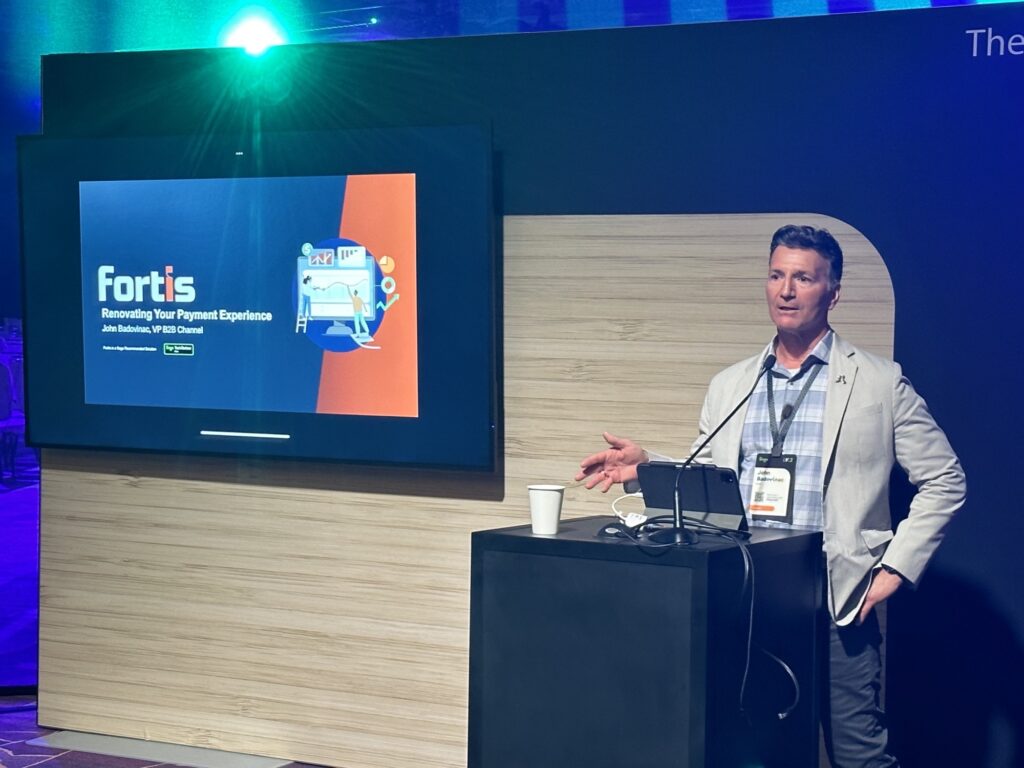
John Badovinac, VP of B2B Channel at Fortis, hosted a session on “Time to Renovate Your Customers’ Payment Experience,” emphasizing how customizing the entire payment experience can enhance customer satisfaction and streamline operations. “Fortis provided an overview of how no other payment provider can match our award-winning technology, world-class onboarding, and decades of ERP installation experience,” said John. 

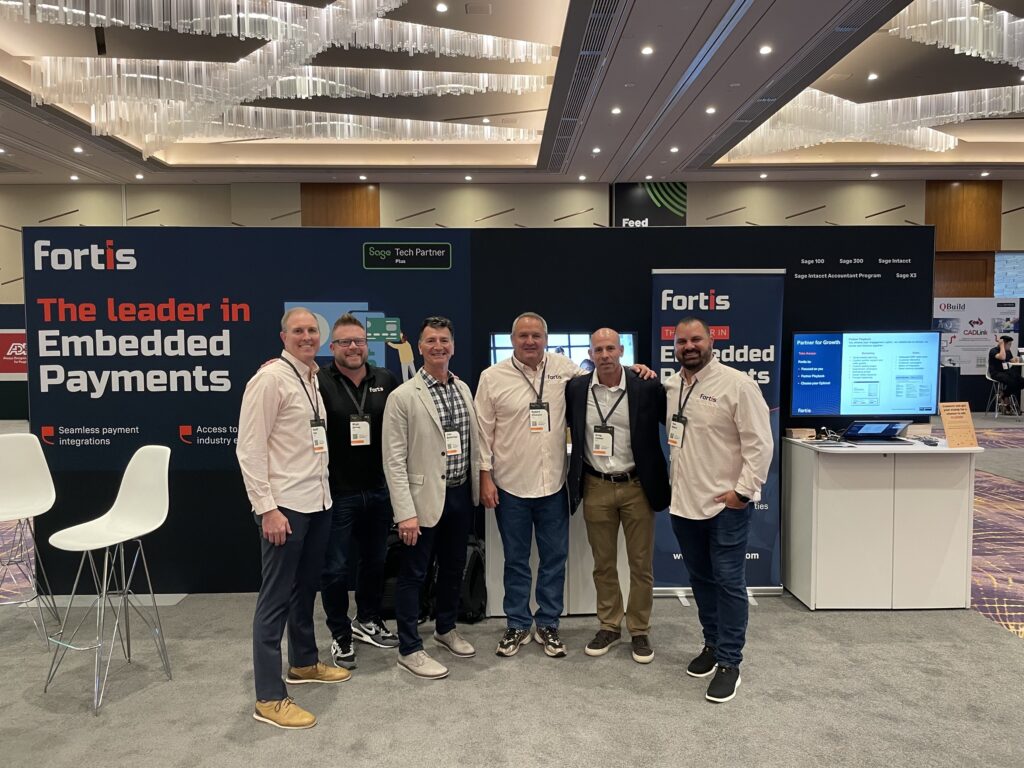
In addition to John’s session, the Fortis team answered questions and shared their B2B payments expertise at Booth #417. Our partnership and product experience leaders enabled businesses to learn more about how to fortify their payments. The Fortis team at our booth included: 

  • Miah Green, SVP of VAR Partnerships 
  • Tom Nanci, SVP of ERP Product & Experience 
  • Geoff Cox, ERP Product Director 
  • Rob Ullmann, ERP Partner Director 

Beyond our ERP expertise, we also enjoyed some fun by hosting the Top Golf game at Summit After Dark alongside Scanco, Cloud at Work, SPS Commerce, APIWORX, and Avalara. We also contributed to the Money Jar raffle, a giveaway of $1,000, and had various giveaways of our own at our booth. 

Overall, we were thrilled to attend and contribute to the Sage Partner Summit and spread the word about our award-winning API technology. 

Looking to be our next Fortis partner? Discover how we work with Sage 100, Sage 300, Sage X3, and Sage Intacct

Fortis Expands Into Canada, Enhances Capabilities for Marketplaces and Software Platforms, and Acquires SmartPay

Embedded payments leader now offers solutions outside the U.S., expands the platform’s capabilities, and brings a new embedded payments team into the Fortis family

NOVI, Mich., June 22, 2023 — Fortis, a payment and commerce technology leader for software providers, marketplaces, and scaling businesses, today announced that the company now offers its solutions in Canada, its first expansion outside the United States. Fortis also announced the acquisition of embedded payments provider SmartPay and rolled out enhanced funding and settlement capabilities to meet rising demands from marketplaces and software platforms.

Canada Expansion

Fortis’ expansion allows software platforms and businesses operating in the Canadian market to leverage proprietary technology once available only to U.S. clients. The Canadian roll-out supports omni-channel credit card processing as well as Interac Debit acceptance. Customers in Canada can also access the full suite of Fortis solutions through award-winning APIs, enabling seamless integration with their existing payment software.

New Funding and Settlement Capabilities

Fortis has also launched a Secondary Amount feature to allow integrated software partners to assess and collect platform fees when processing payments through its solutions. Secondary Amount is available in the Fortis API suite. Software partners can designate a platform or other type of fee to be assessed as part of a single transaction and deposited separately. The single authorization and split settlement capability is critical for high-performing marketplace partners.

“We are extremely proud of the strides we’ve made in the past few months in Product,” said Kevin Shamoun, SVP Product & Innovation, Fortis. “Our efforts will not only expand payment processing into new locations, but also improve the interaction of data between merchant and ISV, enhancing the user experience.”  

SmartPay Acquisition

Fortis also acquired embedded payment solution provider SmartPay, which has strong partnerships in the enterprise software and ERP ecosystems. SmartPay was founded to bring enhanced technology solutions to the small business community, and brings its exceptional team, productive customer relationships, and rich capabilities to Fortis. SmartPay founders and former managing partners Mike Sheffey and Nate Schloss will join the Fortis leadership team as part of the acquisition. MAPP Advisors (www.mappadvisors.com) acted as advisors to SmartPay for the transaction.

“We are thrilled to be a part of the Fortis team,” Sheffey said. “Fortis’ continued growth over the past few years has made them an obvious choice for our next chapter.” Schloss added, “Extending Fortis’ capabilities to all of our clients will be a great addition to our toolset and is going to do wonders for the future of embedded payments.”

The SmartPay acquisition gives Fortis access to a skilled team of integrated payments professionals and enables the company to leverage the strong relationships SmartPay built, strengthening Fortis’ ability to serve scaling client businesses in complex markets. “I could not be more excited about the opportunities SmartPay brings to our organization,” says Greg Cohen, CEO, Fortis. “Mike and Nate will be invaluable additions to the Fortis team. We continue to prove that Fortis is the leader in embedded payments — and this is just the beginning.”

About Fortis

Fortis is the leader in embedded payments for software providers, processing billions of dollars annually by delivering comprehensive payment solutions and commerce enablement to software partners and developers. The company’s mission is to forge a holistic commerce experience, guiding businesses to reach uncharted growth and scale. As the solution of choice for the future of payments, Fortis moves commerce closer to invisible with a proprietary platform that supports and strengthens the commerce and payments capabilities of software partners. For more information, visit fortispay.com.

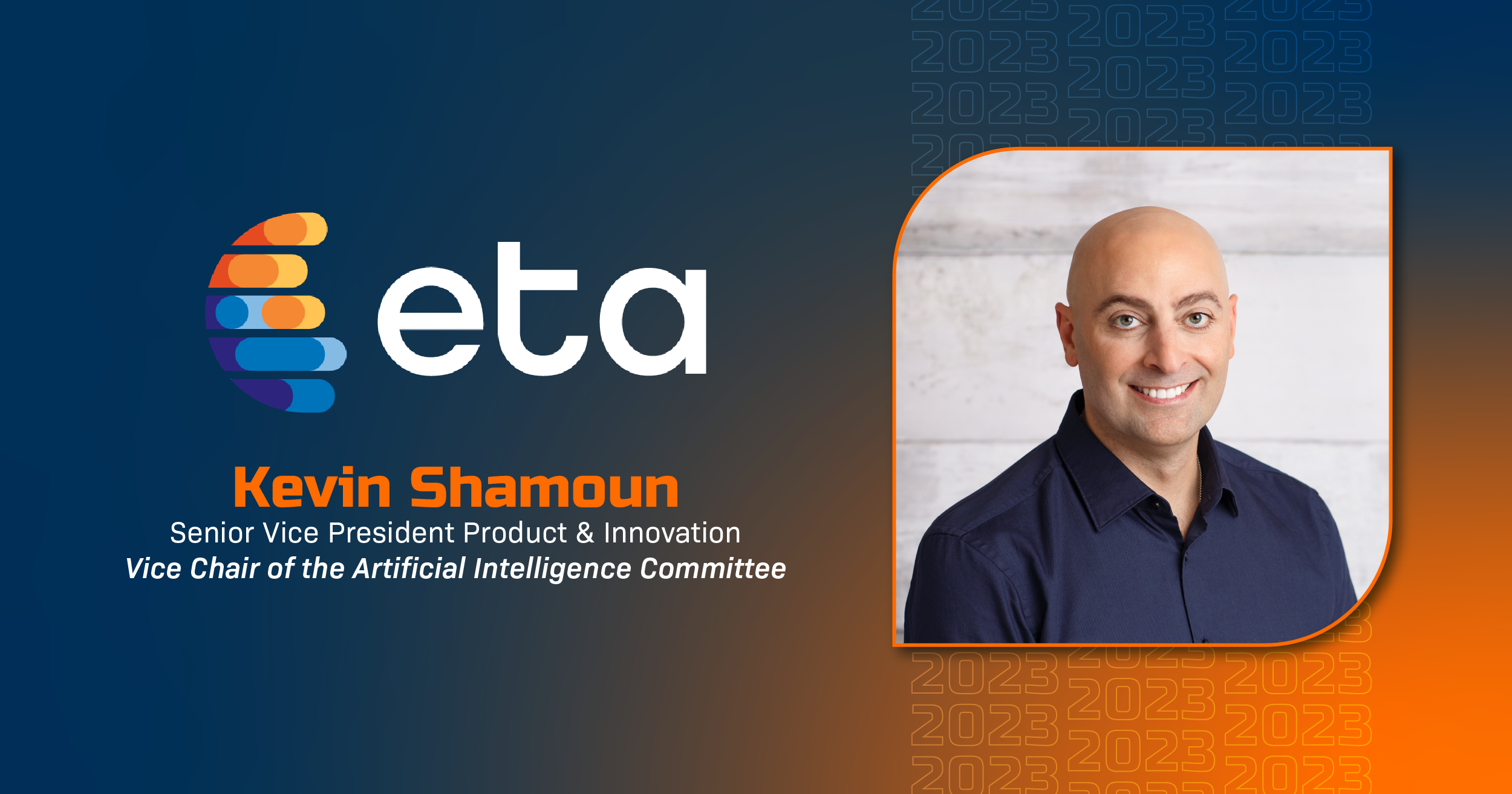
ETA Names Kevin Shamoun of Fortis as Vice Chair of their AI Committee  

The Electronic Transactions Association (ETA) has named Kevin Shamoun of Fortis as the Vice Chair of their Artificial Intelligence (AI) Committee.

With almost two decades of experience working with Independent Service organizations (ISOs) and financial institutions, Kevin offers extensive experience in the payments industry. He has been responsible for designing, deploying, maintaining, and securing critical systems for multiple organizations.

Kevin is no stranger to leadership roles, as he founded the payment gateway Zeamster in 2019 and already serves as ETA’s Chair of the Technology Committee. His current role at the ETA has allowed him to develop resources for merchants and other ETA members to leverage emerging payment trends. 

As a leading member of the ETA’s AI Committee, Kevin will lend his operational and technical knowledge to explore how the industry can use AI to improve payment efficiency and security. He will work together with Russell Moore, Director of Corporate Strategy & Development, Global Payments, and Donald Riddick, Chief Legal Officer, Featurespace, to better define AI and its use cases with the payment industry.

About ETA 

The Electronic Transactions Association (ETA) is the world’s leading advocacy and trade association for the payments industry. Members span the breadth of significant payments and fintech companies, from the largest incumbent players to the emerging disruptors in the U.S. and in more than a dozen countries around the world. ETA members make commerce possible by processing approximately $44 trillion annually in purchases and P2P payments worldwide and deploying payments innovation to merchants and consumers. 

Embedded Payments: Powerful Technology That’s Delivering a Better Way To Do Business  

Think about a typical dinner delivery. Maybe it’s Friday night, and a cheesy pizza has just arrived steaming hot right to your front steps. You take the pie, thank your driver and shut the door — but wait, when did you pay?  

It almost feels like you didn’t.  

As consumers, we’re used to the ease of ordering through apps like UberEATS and Amazon and completing our purchases without tracking down credit cards or counting out cash. Now these types of embedded payment experiences are becoming commonplace for businesses across a myriad of other industries, including B2B markets, to the benefit of buyers and sellers alike — as well as the software providers who support them.  

Why everyone wins with embedded payments 

Customers aren’t the only ones who appreciate the convenience of payments being seamlessly woven into transactions. There are a multitude of ways embedded payments help businesses, too. Fortis Chairman and CEO Greg Cohen has seen many innovations over his 20-year career in payments and was an early advocate of integrated technology. 

“A fully embedded payments experience is better for the person making the purchase because it’s just simple and easy, so that’s inherently going to drive engagement and increase the likelihood of repeat purchases,” Cohen said. “The business also gains efficiency in the back office, where processes such as posting payments to the general ledger are automated and not manually input.” 

Additionally, embedded payments have been shown to improve cash flow by reducing collection costs and shortening the time accounts payable are outstanding, which can be crucial in industries like healthcare where more than 41% of adults in the U.S. have medical debt and invoice write-offs are high.  

“It’s not just about facilitating payments anymore,” Cohen said. “Businesses need to turn the traditional payments acceptance approach into a “commerce facilitation” mindset and create a true, competitive advantage. The platforms and payments partners who do that will win in the long run.” 

What software providers, marketplaces and developers should look for in a payments partner 

As businesses search for more ways to boost sales, cut costs and keep customers happy, they’ll increasingly seek out software and digital platforms which help them do all three simultaneously.  

Providers can still monetize payments as an additional revenue stream while helping their business clients gain a competitive edge through commerce enablement. However, which payments partner is “the best” depends on the needs and goals of the platform and the people using it, according to Mark Bishopp, Senior Vice President and Head of Embedded Payments/Finance and Partnerships.  

“At Fortis, we help do the heavy lifting, taking the weight of risk and data management off our partners’ shoulders,” Bishopp said. “And yes, embedded payments are industry agnostic, but that doesn’t mean the payments partner should be. We believe it’s important to know the nuances of the verticals you’re serving.”  

How Fortis enables commerce by taking a different approach to embedded payments 

Payments partners come in all shapes and sizes, but Fortis focuses on specific market segments where the company has deep expertise. With Cohen at the helm, Fortis continues to offer tailored experiences to its clients in hospitality, healthcare, retail and wholesale distribution in addition to ERP systems.  

“If somebody just wants a set of APIs, there’s a bunch of us who can do that,” Cohen said. “But if you need or want a guided journey as you go up and down the paradigm of commerce options, we provide that personalization and specialization. And the journey is different for every software provider, and in some cases, it’s different for every merchant using the platform.” 

This intricate knowledge and personal service gives Fortis the ability to create new features and functions that a one-size-fits-all sandbox can’t supply. For consignment retail shops, that means developing embedded payout capabilities to streamline the often-laborious tasks of accounts payable. For chiropractors and physical therapists, it’s click-to-pay invoices and embedded inventory functionality for medical equipment.  

“We’re here for the long-term and evolution of your journey. As a Fortis partner, you can go up or down the tech and services stack based on your business needs, and that is really unique,” Cohen said. “No matter what comes next, we’re going to keep listening to the market and following our customers so we can deliver everything they need to be successful. And that’s going to be different for the pizza guy than the doctor’s office.”  

For more information about partnering with Fortis, contact us here

Partner Spotlight: Ricochet POS 

Ricochet partnered with Fortis to go beyond the basics of a payment integration and added tremendous value to their product by tapping into next-gen embedded payment features.

Creating solutions for niche business has many rewards. For Ricochet, they were able to build a platform to free clients from the constraints of old technology and outdated practices. At the same time, they continue to craft their product around the direct feedback from consumers and enhance the platform.

As a part of the specialty retail and consignment verticals, they supply their end-users a way to manage inventory, keep track of consignees, and other general business functions. The owners of Ricochet noticed that when it came to payments it was up to the customer to find a third-party provider to fill this need. While stand-alone solutions would perform the basic tasks, managing the communication between the POS and the payment terminal would be difficult for front and back of house employees. That pain-point had their team redirecting their product roadmap, looking for an integration.

There exist several payment companies out there who perform the basics of taking and processing credit cards. Through the field of options, Ricochet further explored the rich features that combine several types of integrations and bundle them under their POS system.

After a deep PayOps evaluation with Fortis, Ricochet was given a plan to embed payments with the Fortis Platform’s robust omni-channel payment systems and their innovative features that help merchants further connect with their customers. The newly updated Cloud 2.0 gateway integration creates one API that Ricochet develops for. Additionally, with this update, they relieve their technical burden of supporting terminal deployment because of Fortis’ rapid terminal deployment online management system.

Now all POS and payment features are under one system making it more efficient for staff to track payments. With the text message payment link feature, merchants can send a text message to their customers who are making phone orders or deposits and request payments. By offering digital receipts, their customers are now tapped into a digital atmosphere. It is now possible to submit their ratings on their experience without moving to another platform. Merchants have the opportunity to display interactive marketing messages on their customer’s phone.

Fortis goes beyond the basics of taking payments and provides a value-add platform that helps Ricochet develop a robust and multi-functional product. To become a Fortis partner and do the same for your business or software, visit our partner page.

Fortis Expands Strategic Partnership With Sage To Provide Superior ERP Experience With Integrated Payments

Fortis Is Now Recognized as a Sage Recommended Solution, Optimizing Revenue With Flexible Payment Options 

Novi, Mich. (May 16, 2023) – Fortis, a payment and commerce technology leader for software providers, marketplaces and scaling businesses, today announced it is a new recommended payments partner of Sage, the leader in accounting, financial, HR, and payroll technology for small and mid-sized businesses.   

The comprehensive Fortis solution is now fully integrated into various Sage enterprise resource planning (ERP) systems and products, making it easier for businesses to get paid and track payments in real time. Both companies have decades of experience in the ERP ecosystem and growing B2B market. Fortis delivers a fully embedded payments and commerce experience driven by an accessible, responsive, and experienced team. 

“The partnership with Fortis helps users to manage their cash flow and spend less time in the back office sorting out payments,” said Chip Mahan, VP and Global Commercial Head of Payments & Banking at Sage. “Fortis has a deep understanding of the ERP market that enables them to build and customize solutions that have a positive impact on each customer’s business.”   

Organizations using Fortis’ payments solutions integrated within the Sage ecosystem can create a unified commerce experience in multiple channels. The software allows clients to send electronic invoices via email or text and get paid immediately. Customers of the business can even pay multiple invoices in one transaction, a feature developed specifically for the B2B market.  

In addition, businesses can accept transactions in their call center through their website directly, or via a myriad of ecommerce and ISV partners. Fortis solutions also can handle counter sales for in-person acceptance, with all transactions in any channel posting directly back to the general ledger.   

SMBs trust Sage to help them run and optimize their companies. Serving millions of customers around the world, Sage enables businesses to be more productive, resilient, and flexible. 

“Like Sage, the Fortis solutions are designed to scale with a business, so we can meet our mutual clients’ needs today and as they grow,” said Greg Cohen, CEO and chairman of Fortis. “Together, our teams will continue to innovate and develop more tools to support businesses, speed their cashflows and maximize their revenues.” 

Payments integrated within the Sage ERP platform allow company leaders to unlock a wealth of data that can be used to produce customer profiles, develop marketing campaigns, and reveal potential upsells or cross-sell opportunities.  

“The possibilities are almost endless with a powerhouse like Sage as our partner,” said Cohen. “We’re transforming commerce into a competitive advantage for the businesses we serve, and I can’t wait to see what the future holds for them.”  

Fortis creates a unified and secure commerce experience to support ERP solutions across many industries. The company and its leadership team remain committed to providing the latest in payment technology and the best in personalized service.  

Learn more about Fortis at fortispay.com. For more information about Sage, visit www.sage.com/en-us/.  

### 

Press Contact: 

Emily O’Brien
Next PR 
fortis@nextpr.com 

About Fortis 

Fortis is the leader in embedded payments for software providers, processing billions of dollars annually by delivering comprehensive payment solutions and commerce enablement to software partners and developers. The company’s mission is to forge a holistic commerce experience, guiding businesses to reach uncharted growth and scale. As the solution of choice for the future of payments, Fortis moves commerce closer to invisible with a proprietary platform that supports and strengthens the commerce and payments capabilities of software partners. For more information, visit fortispay.com

PayPod: Embedded Payments with Mark Bishopp 

Last month, Mark Bishopp, SVP of Embedded Commerce & Partnerships at Fortis, met with Jacob Hollabaugh, Host of PayPod, to discuss the embedded payment experience.  

In their podcast discussion, the two covered the following topics: 

  • A future of seamless transactions 
  • The flexibility Fortis offers and the customized payment service it provides 
  • What makes Fortis stand out as a service among other competitors 
  • How surcharging is similar yet very different from cash discounts 

To learn more about Mark’s podcast and to read the full transcript, you can visit SOAR Payments’ page

The Future of Embedded Payments: ETA TRANSACT 2023 in Review

Fortis leadership had the pleasure to attend and speak at the 2023 TRANSACT conference, powered by ETA. As one of the leading payments events, our team led in-depth discussions about the future of the payments ecosystem, the power of embedded payments, and how individuals in the industry can advance their careers. 

If you weren’t able to attend or just wanted a refresher, here’s a summary: 

The Future of Embedded Payments: Greg Cohen, CEO

With over two decades of experience in the payments industry, Greg Cohen, CEO of Fortis, helped to kick off the conference. Together with Deana Rich from Infinicept, he introduced the embedded payments talk track.  

He also moderated a Fireside chat with Christie Stunkel, Head of Global Payments Partnerships at Square. In this session, titled The Future of Embedded Commerce, Greg and Christie explored new payment methods like Cash App Pay and Buy Now, Pay Later (BNPL). 

“We had an amazing and insightful discussion as Christie took us through the evolution of Square from the days of the dongle to the disruptive end-to-end embedded commerce business they have become,” said Greg. 

Going beyond current trends, they highlighted the likely roadmap for the future of embedded payments and how this will affect businesses and consumers. 

The Embedded Commerce Ecosystem: Mark Bishopp, SVP

Mark Bishopp, SVP and Head of Embedded Payments/Finance & Partnerships, led a panel titled The View from Across the Ecosystem: Embedded Commerce Today on how embedded payments has evolved over the years. As a leader in the financial services space since 1988, Mark understands and is connected to every part of the payments ecosystem and technology, including traditional payments, embedded finance, third-party payments, and blockchain.  

Speaking alongside Eric Queathem from WorldPay, Richie Serna from Finix, and Cassis Wong from Shopify, this session explored the current trends of the embedded commerce ecosystem and what it might look like in the near future.  

“We had a great conversation on payments around the perspectives of merchants, consumers, and the solutions supporting embedded payments,” said Mark. “For merchants in particular, the stakes are high to remain competitive. It’s become critical for merchants to work with solutions that treat Payments as a Strategic Asset (PaaSA).” 

Professional Development with a Growth Mindset: Kathy Kmiotek, Director of Channel Marketing 

Kathy Kmiotek, the Director of Channel Marketing at Fortis, has a long history of using data-driven, results-focused marketing and business strategies for multiple industries. And as a member of PayTech Women, a community celebrating women in the fintech industry, Kathy moderated a career development panel as a part of the Empow(H)er Program.  

In How to Maximize Your Career Potential, Kathy discussed the importance of thinking beyond promotion and adopting a growth mindset with Sandra Ishak, the Director of Chanel Marketing at Ingenico. Together, they explored their careers as tenured marketing professionals and women in fintech and shared tips on how young professionals can get the most out of their career journey.       

“Much of maximizing your career potential is about being on the upside of change and learning from experience,” said Kathy. “Set clear goals, be adaptable, stay proactive, seek feedback, and build a network to support and challenge you.” 

Accelerating Payments Innovation 

As a leader in embedded payments, Fortis is at the forefront of change in creating a nearly invisible payment process. Greg, Mark, and Kathy have all shared insight into the forces transforming the way we process and streamline payments today.  

Of course, it has also been a pleasure to learn from other leaders in the industry. We are all working together towards the same goal: To make payments faster, easier, and safer than ever before. 

To learn more about how our award-winning solutions work, check out this summary of our embedded payments solution